Immersive Labs

Training spaces for makers who want their scares sharper, safer, and emotionally grounded in story.
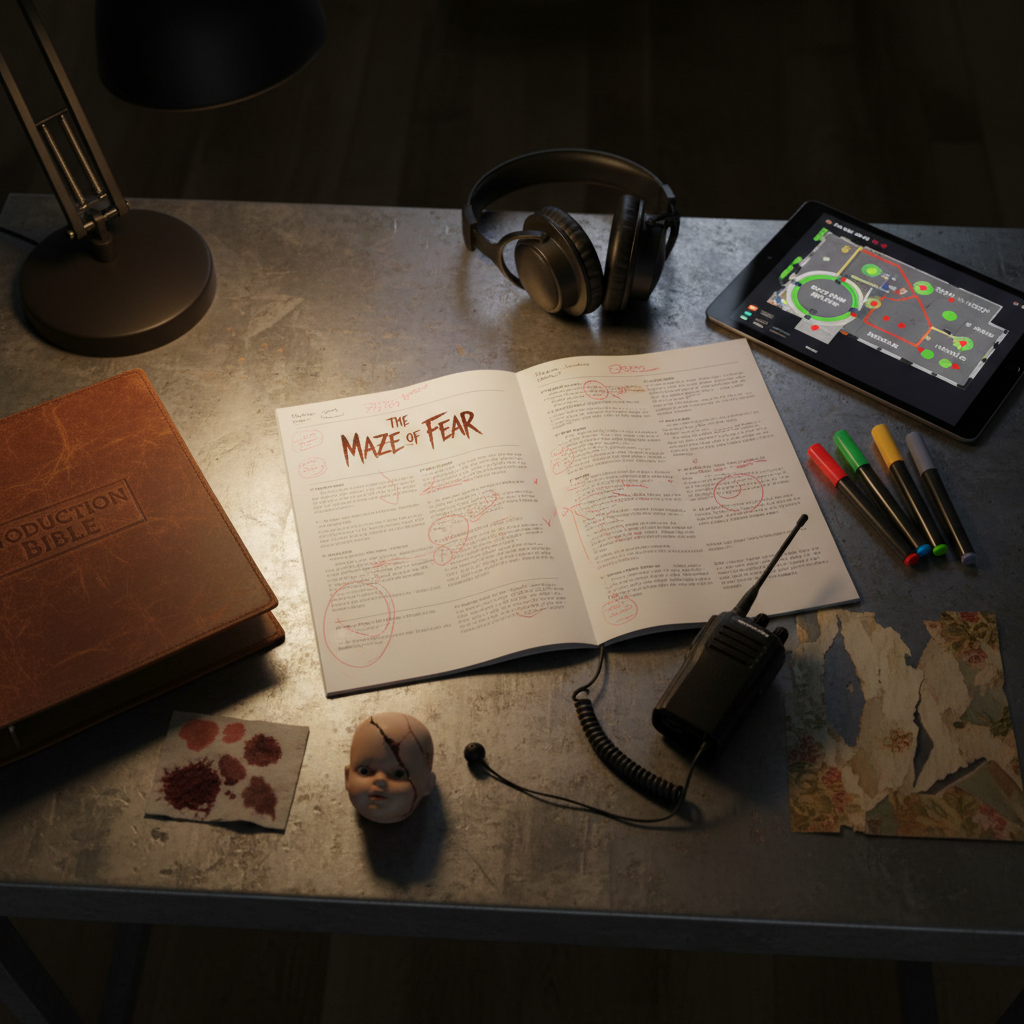
A close-up, overhead photographic shot of a creative producer’s annotated immersive horror script spread across a scuffed metal table, surrounded by production artifacts: a distressed leather binder, color-coded highlighters, a walkie-talkie with a coiled earpiece, a noise-cancelling headset, and a tablet showing a floor plan with routes and scare zones. Small prop samples—fake blood swatches, a chipped ceramic doll head, fragments of aged wallpaper—are neatly arrayed along one edge. Soft, focused desk lighting pools over the pages, leaving the room edges to fall into shadow. The composition uses rule of thirds and shallow depth of field, capturing the meticulous planning and narrative engineering behind an intense, immersive horror experience.
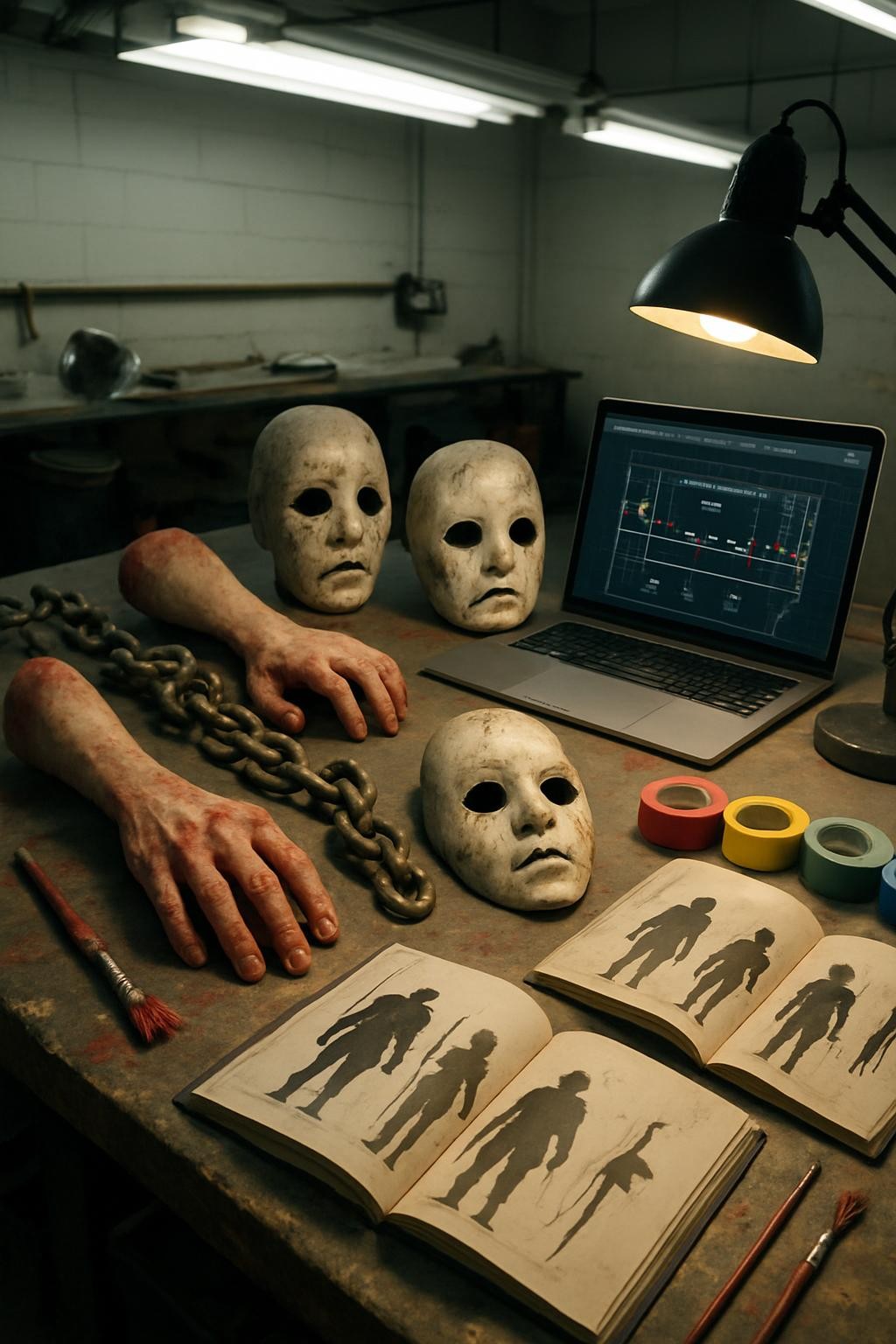
A cluttered production design workshop table covered in detailed horror props: silicone severed limbs mid-paint, weathered chains, cracked porcelain masks, and open sketchbooks with partially visible concept art silhouettes. Beside them, a laptop displays a lighting plot, and color-coded tape rolls line the edge of the table. Overhead fluorescent fixtures create bright, clinical light that reveals every texture and brushstroke, while a single desk lamp adds a warm pool of focus. Captured from a slightly elevated angle in photographic realism, with sharp focus throughout, the mood balances obsessive craftsmanship with underlying menace, ideal for illustrating the behind-the-scenes creation of immersive horror experiences.

Offerings

Hands-on labs, creative salons, and one-on-one consulting for emerging immersive horror makers. Shape tighter scares, safer runs, and richer stories with training built from real productions, not theory.

Workshops
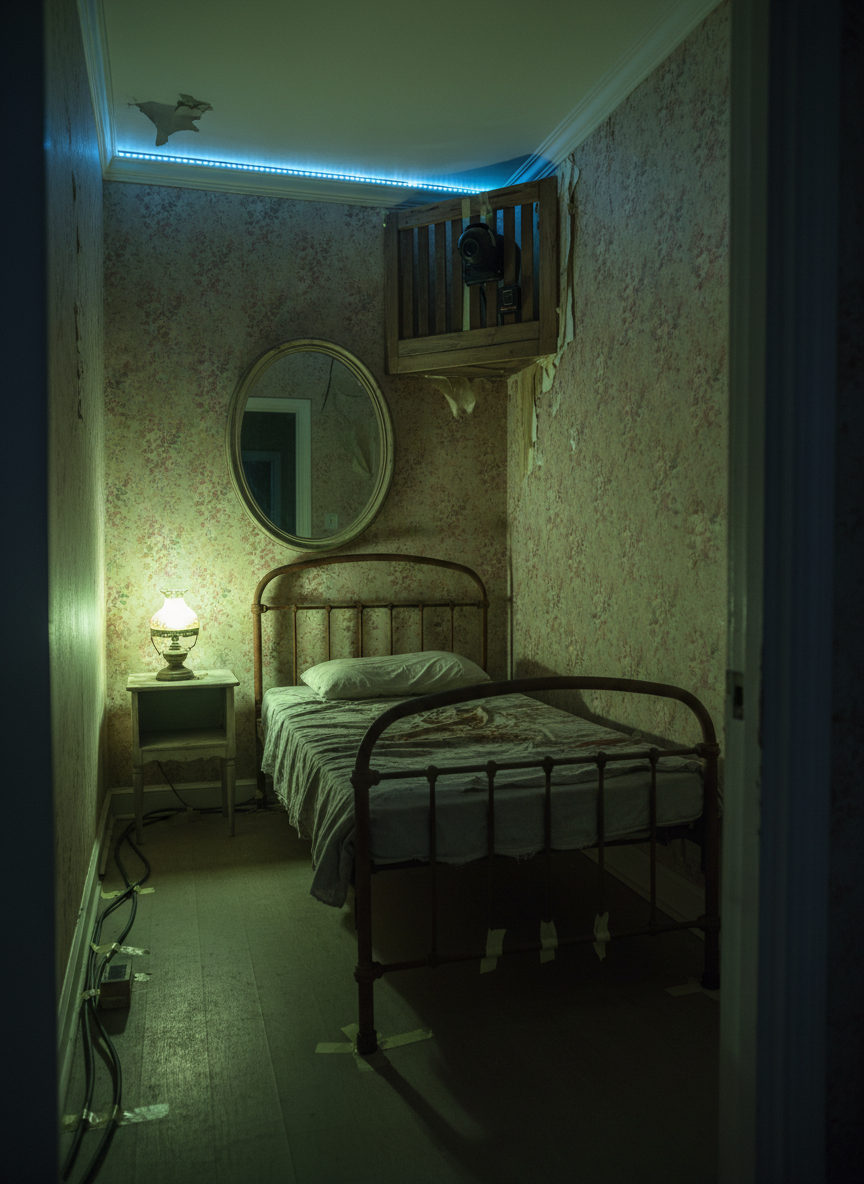
A fully dressed immersive horror room mid tech-rehearsal: a narrow, decaying bedroom set with peeling floral wallpaper, a sagging iron-framed bed, flickering practical lamp, and a cracked oval mirror. In the corner, disguised behind aged wooden slats, a small, clearly visible surveillance camera and infrared sensor hint at hidden show control. Discreet cable runs snake along the baseboards, secured with color-matched tape. Low, moody lighting mixes sickly green from a practical lamp with faint blue spill from a concealed LED strip, creating layered shadows. Photographic realism, shot from the doorway at eye level with a moderate depth of field, conveys an authentic, production-focused view into how technology supports atmosphere.

Intensive

One-night scare design intensive, online via Zoom — March 14, 7–10pm PT. Ideation drills, live feedback.
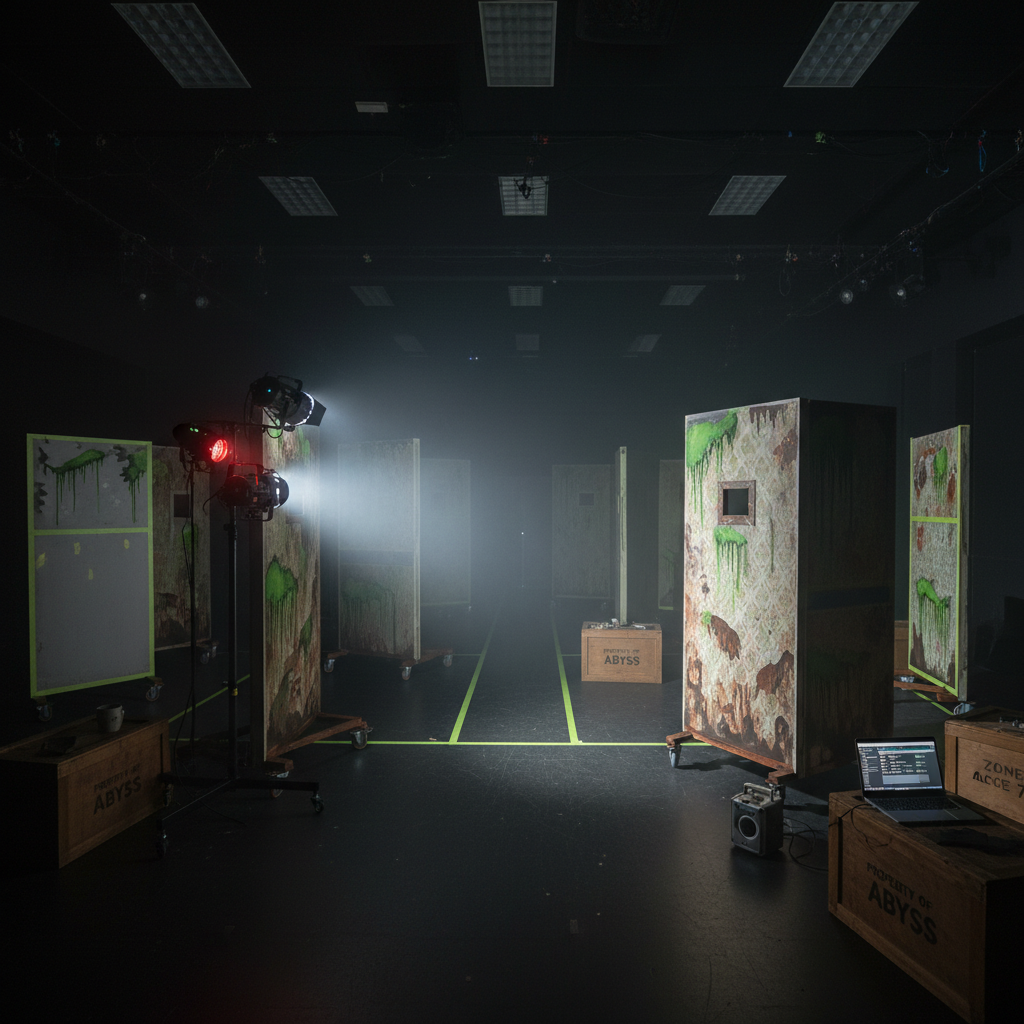
Inside a fog-hazed black box rehearsal space, modular scenic flats painted like rotting corridor walls stand half-finished on rolling casters. A portable lighting tree supports a mix of LED pars and a single powerful profile fixture, its beam slicing through haze to illuminate a marked pathway of glow tape on the floor. Prop crates labeled with stencils, a portable speaker, and a laptop running cueing software sit near the space’s edge. Overhead work lights are dimmed, leaving mostly the theatrical beams to define the space. Photographic realism, captured from a wide, slightly elevated angle with deep focus, emphasizes the transitional, in-progress nature of immersive horror production.

Salon

Small-group salon in Los Angeles — April 6, 2–5pm. Workshop beats, walk-through debrief, Q&A on guest psychology.