About Steph

Step behind the scenes of my haunted career, where playful terror meets meticulous production planning.
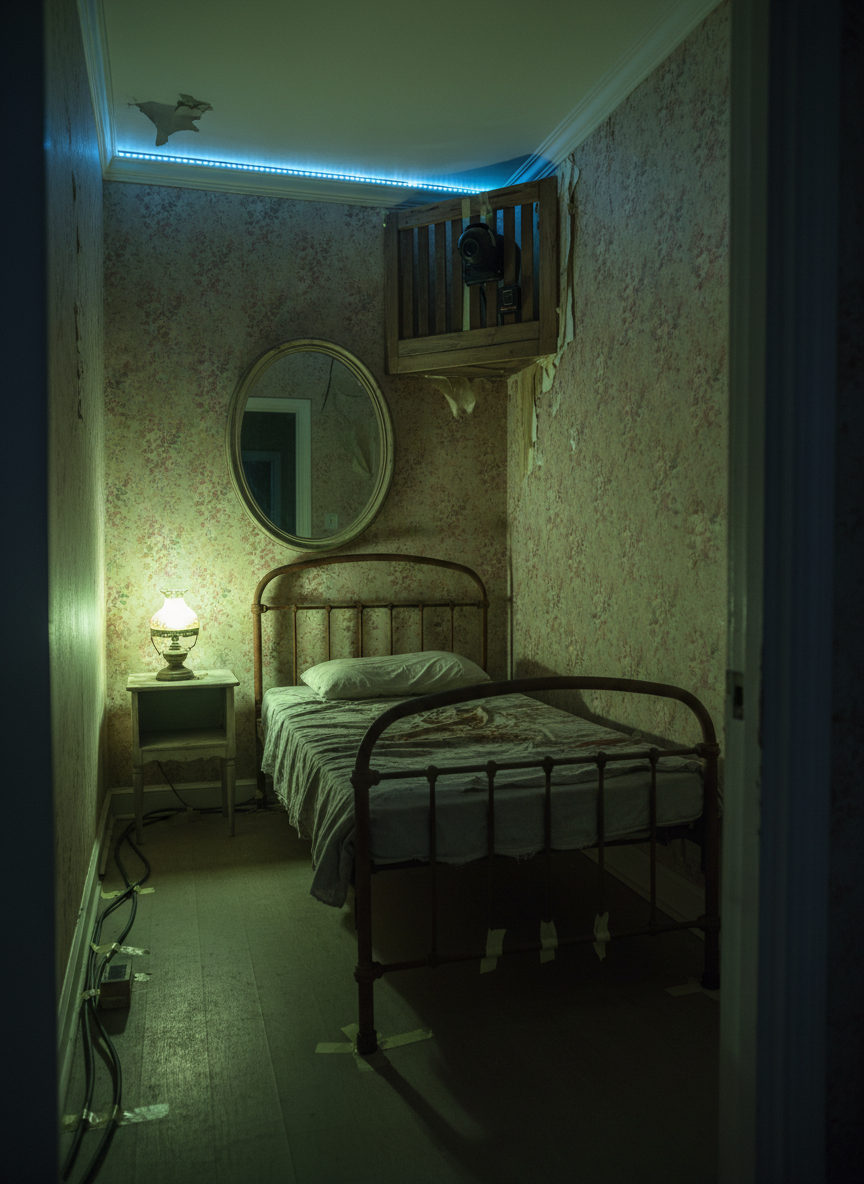
A fully dressed immersive horror room mid tech-rehearsal: a narrow, decaying bedroom set with peeling floral wallpaper, a sagging iron-framed bed, flickering practical lamp, and a cracked oval mirror. In the corner, disguised behind aged wooden slats, a small, clearly visible surveillance camera and infrared sensor hint at hidden show control. Discreet cable runs snake along the baseboards, secured with color-matched tape. Low, moody lighting mixes sickly green from a practical lamp with faint blue spill from a concealed LED strip, creating layered shadows. Photographic realism, shot from the doorway at eye level with a moderate depth of field, conveys an authentic, production-focused view into how technology supports atmosphere.
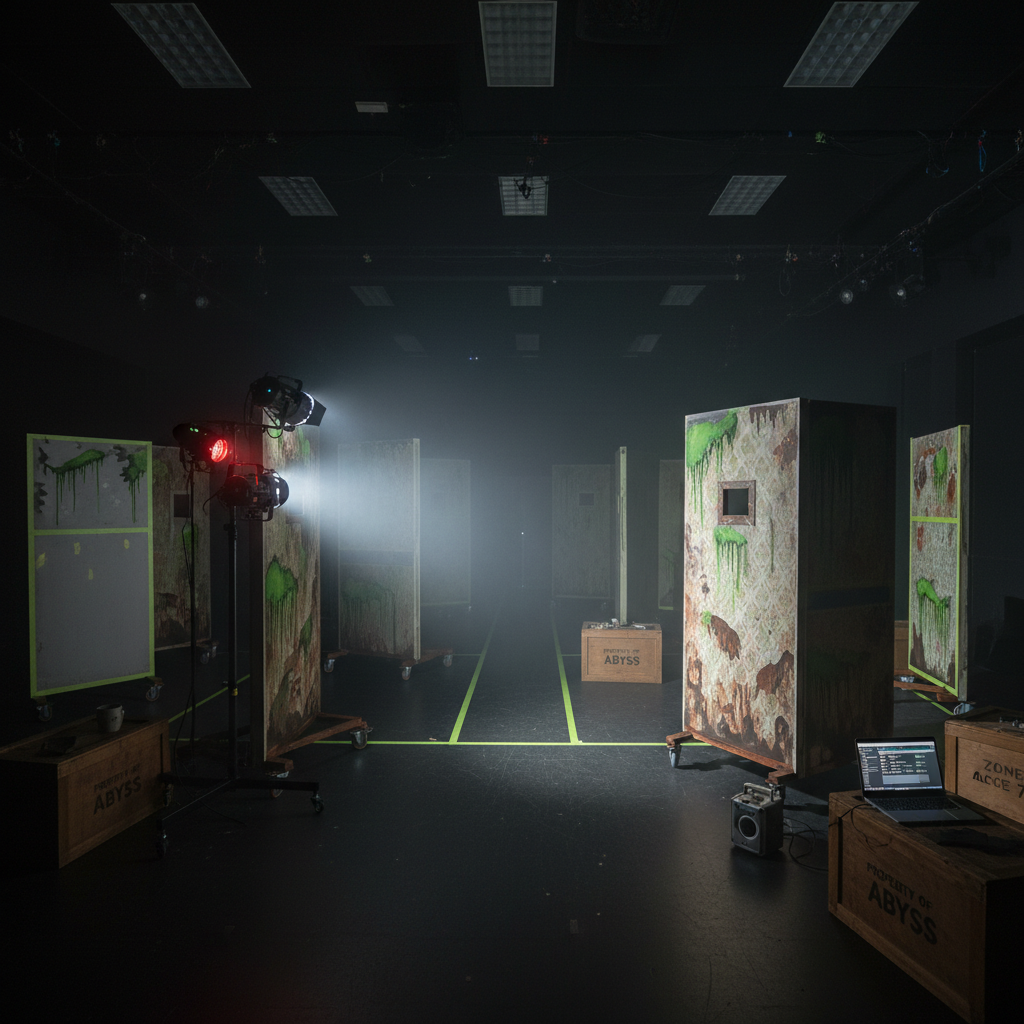
Inside a fog-hazed black box rehearsal space, modular scenic flats painted like rotting corridor walls stand half-finished on rolling casters. A portable lighting tree supports a mix of LED pars and a single powerful profile fixture, its beam slicing through haze to illuminate a marked pathway of glow tape on the floor. Prop crates labeled with stencils, a portable speaker, and a laptop running cueing software sit near the space’s edge. Overhead work lights are dimmed, leaving mostly the theatrical beams to define the space. Photographic realism, captured from a wide, slightly elevated angle with deep focus, emphasizes the transitional, in-progress nature of immersive horror production.

From Haunted Houses to Worlds

I started as a scare actor squeezing into rubber masks; now I design full-contact nightmares, leading creative teams, building immersive worlds, and translating the chaos of production into stories that actually respect the craft.
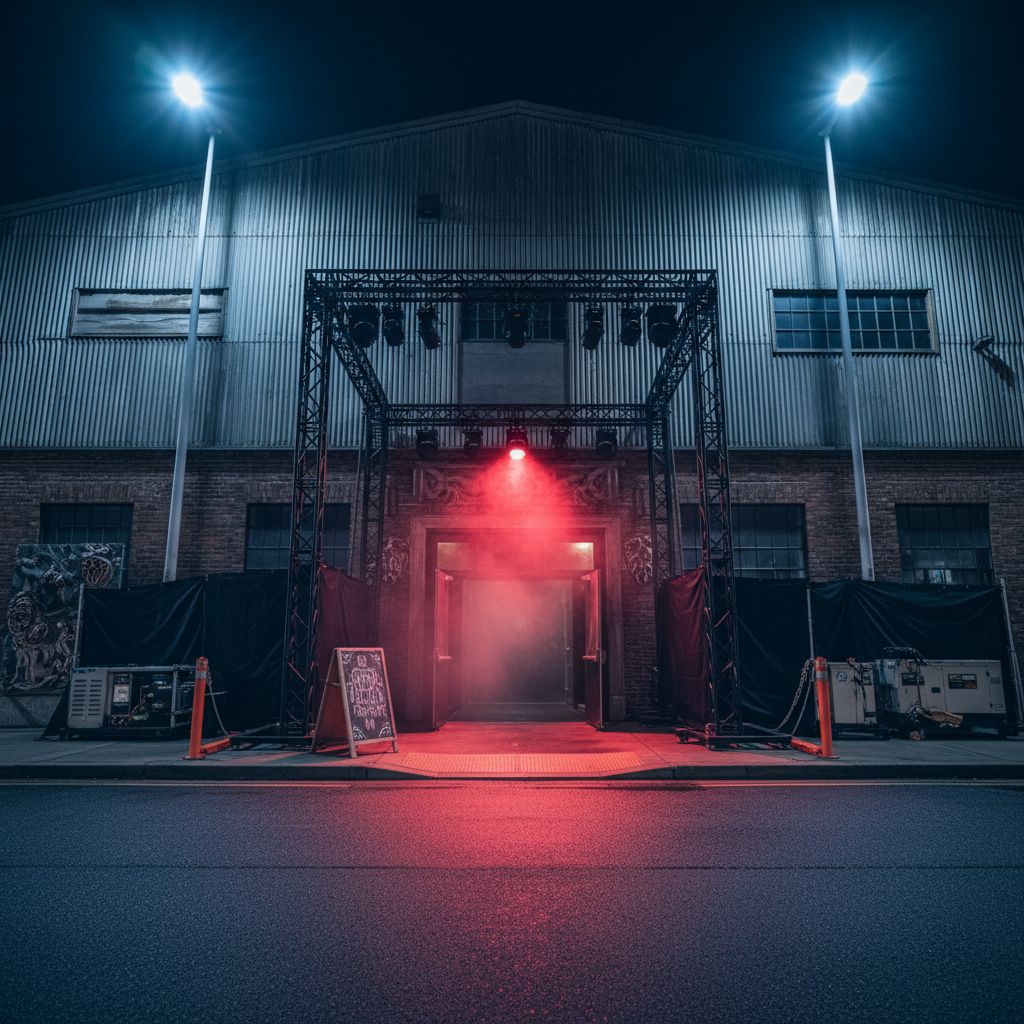
A night-time exterior of a pop-up immersive horror venue, set in a repurposed industrial building. The main entrance is framed by truss structures holding theatrical lights, subtle fog seeping from the doorway, and a sandwich board sign whose text is unreadable but clearly part of the show. Black soft goods and scenic panels hide back-of-house areas, while orange cable ramps cross the pavement. Streetlights cast a cool, urban glow, contrasted by a single blood-red wash light over the entrance, producing sharp, dramatic shadows. Captured in photographic realism from a low, wide angle, with crisp focus and deep depth of field, the mood is professionally orchestrated dread, emphasizing production infrastructure as much as the horror aesthetic.